
Community health outreach
Community health outreach in Cameroon
REHA supports families and local partners with practical health education, prevention, and compassionate care.
Community mission
Building health, trust, and resilience in local communities.
To assist local communities to their door steps especially vulnerable and mentally unstable. To sustain and harness capacity building programs free of charge. To improve access to free essential healthcare. To foster multi-sector partnership to improve campaigns such as humanitarian services like cleanup campaigns. To carry out mental health and psycho social support/needs.
Core values
The principles that guide our work
REHA's values shape how we serve communities and how we build trust with partners and families.
Compassion and dignity
Compassion and dignity.
Integrity and transparency
Integrity and transparency.
Accountability
Accountability.
Evidence based action
Evidence based action.
Community participation
Community participation.
Respect and non-discrimination
Respect and non-discrimination.
Accreditation
Restore Health Alliance Cameroon
Quality Inclusive Healthcare
Authorisation: 915/G.37/C84/VOLI/3AP. Head office: Limbe, Fako Division. Motto: Quality Inclusive Healthcare.
The launch event successfully showcased the association’s core mission by distributing over 800,000 FCFA worth of food and medical kits directly to attendees, addressing immediate needs while building trust and visibility within the community.
Registered
Restore health alliance
Governance
Ethical service delivery and community accountability
Vision & mission
A clear path for long-term community wellbeing
REHA's strategy centers on practical support, trusted partnerships, and sustainable local capacity.
Vision
A Healthier, empowered Limbe Community where vulnerable people can access quality health support, prevention services and dignity-driven care regardless of income.
Mission
To assist local communities with medical assistance especially vulnerable disabled persons and mentally unstable. To sensitive and harness capacity building programs. To foster multi sector partnerships to improve community outreach, education and humanitarian services. Community volunteering without discrimination. To mobilise volunteers as local implementers for partners and sustainable development initiatives.
Programs
Health initiatives designed for local needs
Each REHA program brings care, education, and measurable impact to communities through practical outreach.
Health Education and Prevention
Community sensitization on HIV/STIs, malaria, hygiene, maternal health, TB awareness, nutrition, reproductive health, disability, and inclusive health.
Vulnerable Patient Support and Referrals
Practical support, follow-up, and coordinated referrals for vulnerable patients.
Community Outreach Programs
Monthly outreach, health talks, and screenings for neighborhoods, schools, and community groups.
Branch network
Local offices bringing support closer to the community
REHA maintains regional branches that coordinate outreach, clinics, and volunteer efforts for nearby families.
Regional coverage
2+ branches active
Our branch offices are positioned to connect outreach, partnerships, and local health response to real community needs.
Southwest Region Office
Our Southwest Region Office coordinates partner engagement, program planning, and community outreach across the core service area.
Northwest Region Office
The Northwest Region Office supports community resilience by focusing on outreach, health education, and local capacity building.
Gallery
A visual story of REHA's outreach
These visual moments reflect our practical outreach, local partnerships, and community support efforts.
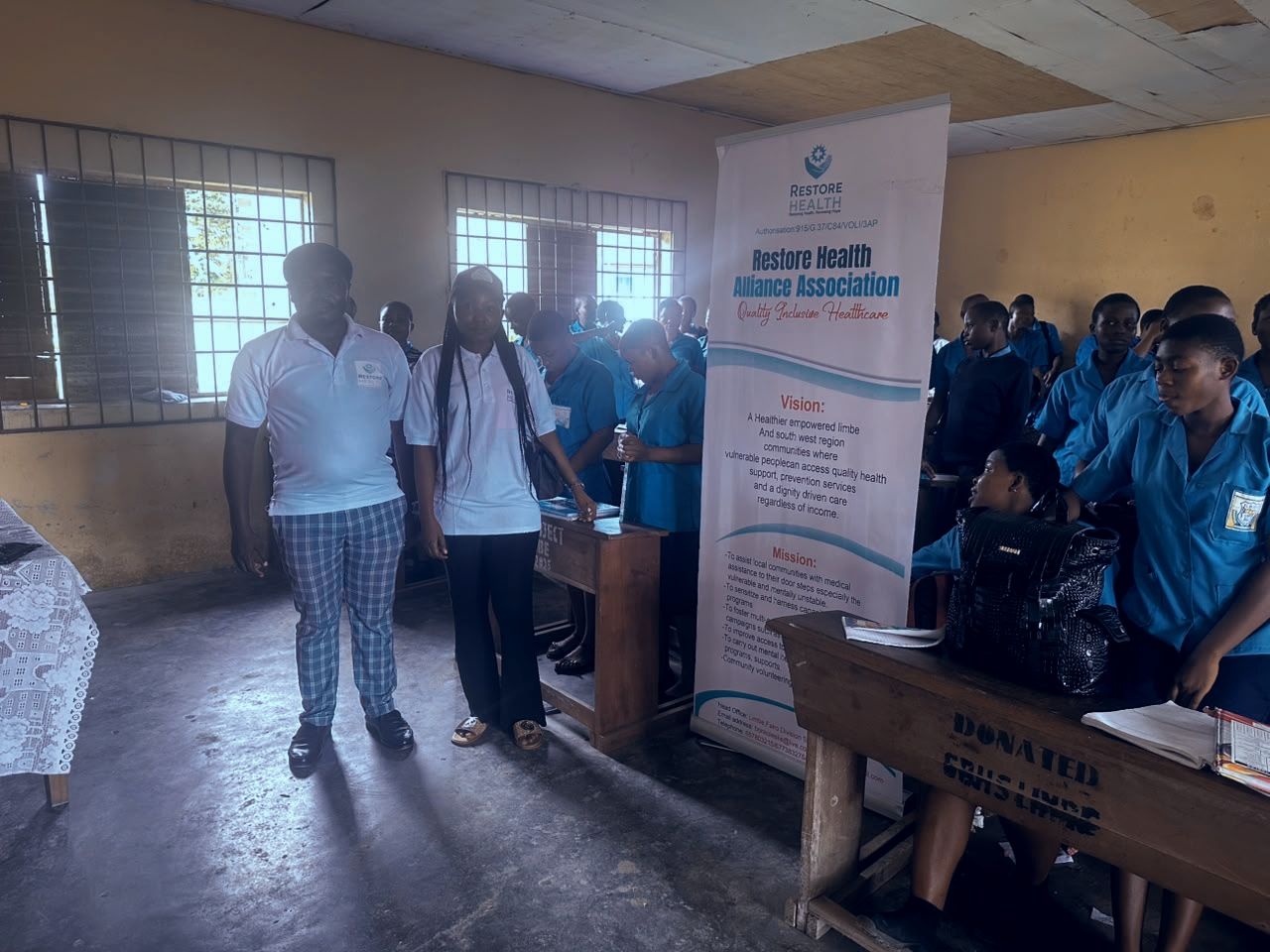
Engaging Government Secondary School in Limbe on Youth Development
Partners
Working with trusted organizations to multiply impact
REHA partners with local and regional groups to strengthen delivery and support sustainable community action.

Health Partners Network
Supporting joint health campaigns and community clinics.

Community Resource Alliance
Providing logistical support and outreach coordination.
Team
Leadership and program staff supporting REHA's goals
Our people combine health expertise, community engagement, and volunteer coordination to deliver results.

Mr. Bonko Leslie Nsalar
President
Entrepreneur and founding executive member

Mrs. Buchu Tracy Wucheck
Secretary / Finance
Founding executive member

Mr. Bonkutuh Ivan
Vice President / Adviser
Business Development Officer and founding executive member
REHA magazine and news
The ideas and work behind REHA's programs
Start with the REHA magazine, then follow the latest activity, volunteer opportunities, and outreach milestones.
News
REHA Engages Government Secondary School in Limbe on Youth Development
Restore Health Alliance Association (REHA) continues to promote youth development through community engagement and education. During a recent engagement with the principal of a government secondary school in Limbe, discussions focused on youth challenges, addiction awareness and opportunities for collaboration to support young people. As part of the engagement, REHA provided a carton of chalk, while additional paper supplies were requested to support the school. This initiative reflects REHA’s commitment to working with community institutions to promote awareness, education and positive development among young people. Quality Inclusive Healthcare.
News
World Mental Health Day Address
𝗔 𝗪𝗢𝗥𝗟𝗗 𝗠𝗘𝗡𝗧𝗔𝗟 𝗛𝗘𝗔𝗟𝗧𝗛 𝗗𝗔𝗬 𝗔𝗗𝗗𝗥𝗘𝗦𝗦 𝗕𝘆 𝗟𝗲𝘀𝗹𝗶𝗲 𝗡𝘀𝗮𝗹𝗮𝗿 𝗕𝗼𝗻𝗸𝗼, 𝗘𝘅𝗲𝗰𝘂𝘁𝗶𝘃𝗲 𝗗𝗶𝗿𝗲𝗰𝘁𝗼𝗿 𝗼𝗳 𝗥𝗲𝘀𝘁𝗼𝗿𝗲 𝗛𝗲𝗮𝗹𝘁𝗵 𝗔𝗹𝗹𝗶𝗮𝗻𝗰𝗲 𝗔𝘀𝘀𝗼𝗰𝗶𝗮𝘁𝗶𝗼𝗻 𝗖𝗮𝗺𝗲𝗿𝗼𝗼𝗻 Good morning, team. Today is October 10th. World Mental Health Day. And this year, the World Federation for Mental Health has given us a theme that isn’t just a slogan — it’s a mirror. 𝗟𝗶𝘃𝗲𝗱 𝗘𝘅𝗽𝗲𝗿𝗶𝗲𝗻𝗰𝗲𝘀 𝗛𝗲𝗮𝗿𝗱: 𝗥𝗲𝗮𝗹 𝗩𝗼𝗶𝗰𝗲𝘀, 𝗥𝗲𝗮𝗹 𝗖𝗵𝗮𝗻𝗴𝗲. I want to talk to you not at you — about what those six words mean for us. For Restore Health Alliance Association Cameroon. For the communities we serve the Littoral, the West, the Northwest, and beyond. And for you, the people who do the serving. 1: 𝗥𝗲𝗮𝗹 𝗩𝗼𝗶𝗰𝗲𝘀 𝗔𝗿𝗲 𝗡𝗼𝘁 𝗖𝗮𝘀𝗲 𝗦𝘁𝘂𝗱𝗶𝗲𝘀: Our vision a healthier community for all does not just carry the name but the statistics we have had from our humanitarian services suggest everyone or anyone is not left out in the impact we bring. The theme this year, set by WFMH, is a deliberate check on that instinct. It’s a reminder that behind every number is a voice. A story. A person who has lived through something that we, as professionals, can study but never fully occupy. A woman in Limbe who heard voices no one else heard and was told she was cursed. A young man in Bamenda whose trauma from the crisis years left him unable to sleep, unable to work, unable to explain why. A mother who lost a child and was told by her community to “just pray about it.” These are not “cases.” These are neighbors. These are the people whose lived experience should be shaping everything we do. So here’s my first ask of you today: 𝗟𝗶𝘀𝘁𝗲𝗻 𝗱𝗶𝗳𝗳𝗲𝗿𝗲𝗻𝘁𝗹𝘆. When someone sits across from you, don’t just hear symptoms. Hear their expertise. They are the expert on their own life. We are not the experts on them. We are partners. And partners listen. 2: 𝗥𝗲𝗮𝗹 𝗖𝗵𝗮𝗻𝗴𝗲 𝗥𝗲𝗾𝘂𝗶𝗿𝗲𝘀 𝗥𝗲𝗮𝗹 𝗛𝘂𝗺𝗶𝗹𝗶𝘁𝘆 I want to be honest with you. NGOs in Cameroon, including ours .sometime carry a quiet assumption: that we are the ones with the answers. That we bring the training, the resources, the solutions. And yes, we do bring important things. We bring clinical knowledge. We bring systems. We bring persistence. But the theme this year and the WHO’s emphasis on deinstitutionalization — challenges that hierarchy. It says: the people who have navigated the mental health system, who have survived stigma, who have rebuilt their lives — they know where the gaps are. They know which programs actually help and which ones are just bureaucratic theatre. As Dr. Antonis Kousoulis of the Global Mental Health Action Network put it: 𝗜𝗳 𝘄𝗲 𝗮𝗿𝗲 𝘀𝗲𝗿𝗶𝗼𝘂𝘀 𝗮𝗯𝗼𝘂𝘁 𝗶𝗻𝘃𝗼𝗹𝘃𝗶𝗻𝗴 𝗽𝗲𝗼𝗽𝗹𝗲 𝘄𝗶𝘁𝗵 𝗹𝗶𝘃𝗲𝗱 𝗲𝘅𝗽𝗲𝗿𝗶𝗲𝗻𝗰𝗲 𝗶𝗻 𝗼𝘂𝗿 𝘄𝗼𝗿𝗸, 𝘁𝗵𝗲𝗻 𝗼𝗻𝗲 𝗼𝗳 𝘁𝗵𝗲 𝘀𝗶𝗺𝗽𝗹𝗲𝘀𝘁 𝗮𝗰𝘁𝗶𝗼𝗻𝘀 𝘄𝗲 𝗰𝗮𝗻 𝘁𝗮𝗸𝗲 𝗶𝘀 𝘁𝗼 𝘀𝘁𝗼𝗽 𝗮𝘀𝗸𝗶𝗻𝗴 𝘁𝗵𝗲𝗺 𝘁𝗼 𝗷𝘂𝘀𝘁𝗶𝗳𝘆 𝘁𝗵𝗲𝗶𝗿 𝗲𝘅𝗽𝗲𝗿𝗶𝗲𝗻𝗰𝗲. Sit with that for a moment. Stop asking people to prove they deserve to be heard. Stop requiring a formal diagnosis before we take someone’s insight seriously. Stop treating lived experience as a “nice addition” to the real expertise. At Restore Health Alliance Association Cameroon, I want us to be the kind of organization where someone can say, 𝗜’𝘃𝗲 𝗯𝗲𝗲𝗻 𝘁𝗵𝗿𝗼𝘂𝗴𝗵 𝘁𝗵𝗶𝘀, 𝗮𝗻𝗱 𝗵𝗲𝗿𝗲’𝘀 𝘄𝗵𝗮𝘁 𝗜 𝘁𝗵𝗶𝗻𝗸 𝘄𝗼𝘂𝗹𝗱 𝗵𝗲𝗹𝗽 — and we don’t ask for their credentials. We pull up a chair. 3: 𝗧𝗵𝗶𝘀 𝗪𝗼𝗿𝗸 𝗜𝘀 𝗛𝗲𝗮𝘃𝘆. 𝗬𝗼𝘂 𝗔𝗿𝗲 𝗡𝗼𝘁 𝗜𝗻𝘃𝗶𝘀𝗶𝗯𝗹𝗲. Now, let me shift. Because this theme isn’t just about our clients. It’s about us. I know what this work does to people. I’ve seen it. I’ve felt it. You sit with pain all day. You carry stories home that you can’t unhear. You watch systems fail people you’ve come to care about. And then you get up the next morning and do it again. That’s not weakness. That’s the cost of doing something that matters. But it is a cost. And if we’re going to talk about “lived experiences heard,” then your lived experiences as caregivers, as frontline workers, as human beings who are not immune to suffering — must be heard too. So here’s my second ask: 𝗖𝗵𝗲𝗰𝗸 𝗶𝗻 𝘄𝗶𝘁𝗵 𝗲𝗮𝗰𝗵 𝗼𝘁𝗵𝗲𝗿. Not just the polite “How are you?” that expects “Fine” as an answer. I mean the real check-in. The one that leaves room for “I’m not okay.” The one that says, “I noticed you’ve been quiet.” The one that makes it safe to say, “I need a break,” without fear. We are going to strengthen our internal support structures this year. But I also need you to know: 𝘆𝗼𝘂𝗿 𝗺𝗲𝗻𝘁𝗮𝗹 𝗵𝗲𝗮𝗹𝘁𝗵 𝗶𝘀 𝗻𝗼𝘁 𝘀𝗲𝗽𝗮𝗿𝗮𝘁𝗲 𝗳𝗿𝗼𝗺 𝘁𝗵𝗶𝘀 𝘄𝗼𝗿𝗸. 𝗜𝘁 𝗶𝘀 𝘁𝗵𝗲 𝗳𝗼𝘂𝗻𝗱𝗮𝘁𝗶𝗼𝗻 𝗼𝗳 𝘁𝗵𝗶𝘀 𝘄𝗼𝗿𝗸. If you are running on empty, you cannot pour into others. That’s not selfish. That’s physics. 𝗪𝗵𝗮𝘁 𝗥𝗲𝗮𝗹 𝗖𝗵𝗮𝗻𝗴𝗲 𝗟𝗼𝗼𝗸𝘀 𝗟𝗶𝗸𝗲 𝗙𝗿𝗼𝗺 𝗛𝗲𝗿𝗲 So what does “real change” look like for Restore Health Alliance Association Cameroon in the months ahead? Let me be concrete. 1. We will create structured opportunities for people with lived experience to advise us. Not as “beneficiaries” at a town hall. As consultants. Paid, when appropriate. Their input will shape our program design, not just validate it after the fact. 2. We will audit our own language. Are we using words that reduce people to their diagnoses? Are we saying “schizophrenic” when we should say “a person living with schizophrenia”? Are we saying “crazy” in the office when we think no one is listening? Language shapes reality. Let’s shape it toward dignity. 3. We will take staff mental health seriously — not as a wellness poster in the break room, but as a structural commitment. Regular debriefings after difficult cases. Access to confidential counseling. Real policies that recognize the toll of this work. 4.We will continue to push for community-based care that respects people’s autonomy and keeps them connected to their families and communities — in line with the WHO’s deinstitutionalization initiative that this year’s theme explicitly supports. Cameroon’s mental health landscape needs this. And we are part of building it. 𝗖𝗹𝗼𝘀𝗶𝗻𝗴: 𝗧𝗵𝗲 𝗪𝗼𝗿𝗸 𝗜𝘀 𝗛𝗮𝗿𝗱. 𝗧𝗵𝗲 𝗪𝗼𝗿𝗸 𝗠𝗮𝘁𝘁𝗲𝗿𝘀. Let me end with this. Today is a day for awareness. But 𝗮𝘄𝗮𝗿𝗲𝗻𝗲𝘀𝘀 𝘄𝗶𝘁𝗵𝗼𝘂𝘁 𝗮𝗰𝘁𝗶𝗼𝗻 𝗶𝘀 𝗷𝘂𝘀𝘁 𝗽𝗲𝗿𝗳𝗼𝗿𝗺𝗮𝗻𝗰𝗲. The theme is “Lived Experiences Heard: Real Voices, Real Change.” The WFMH chose those words deliberately. They chose “heard” — not “recorded” or “documented” or “assessed.” Heard. Hearing requires presence. It requires humility. It requires the willingness to be changed by what we learn. You are the people who make that possible. You are the ones who sit with people in their darkest moments. You are the ones who show up when systems fail and say, “I’m still here.” You are the ones who make Restore Health Alliance Association Cameroon more than an organization — you make it a place where people can be seen. So today, I want to say thank you. Not the corporate thank-you that comes with a lanyard and a lukewarm sandwich. The real kind. The kind that means: 𝗜 𝘀𝗲𝗲 𝘆𝗼𝘂. 𝗜 𝘀𝗲𝗲 𝘁𝗵𝗲 𝘄𝗲𝗶𝗴𝗵𝘁 𝘆𝗼𝘂 𝗰𝗮𝗿𝗿𝘆. 𝗔𝗻𝗱 𝗜 𝗮𝗺 𝗰𝗼𝗺𝗺𝗶𝘁𝘁𝗲𝗱 𝘁𝗼 𝗺𝗮𝗸𝗶𝗻𝗴 𝘀𝘂𝗿𝗲 𝘁𝗵𝗮𝘁 𝘁𝗵𝗶𝘀 𝗼𝗿𝗴𝗮𝗻𝗶𝘇𝗮𝘁𝗶𝗼𝗻 𝗰𝗮𝗿𝗿𝗶𝗲𝘀 𝗶𝘁 𝘄𝗶𝘁𝗵 𝘆𝗼𝘂, 𝗻𝗼𝘁 𝗼𝗻 𝘆𝗼𝘂. 𝗛𝗮𝗽𝗽𝘆 𝗪𝗼𝗿𝗹𝗱 𝗠𝗲𝗻𝘁𝗮𝗹 𝗛𝗲𝗮𝗹𝘁𝗵 𝗗𝗮𝘆. Thank you.
News
REHA Expands Community Health Outreach Activities
RESTORE HEALTH ALLIANCE is expanding its community outreach activities with a focus on health education, prevention, early detection, and community participation Through collaboration with local stakeholders and volunteers, REHA aims to support communities in making informed decisions about their health and wellbeing.
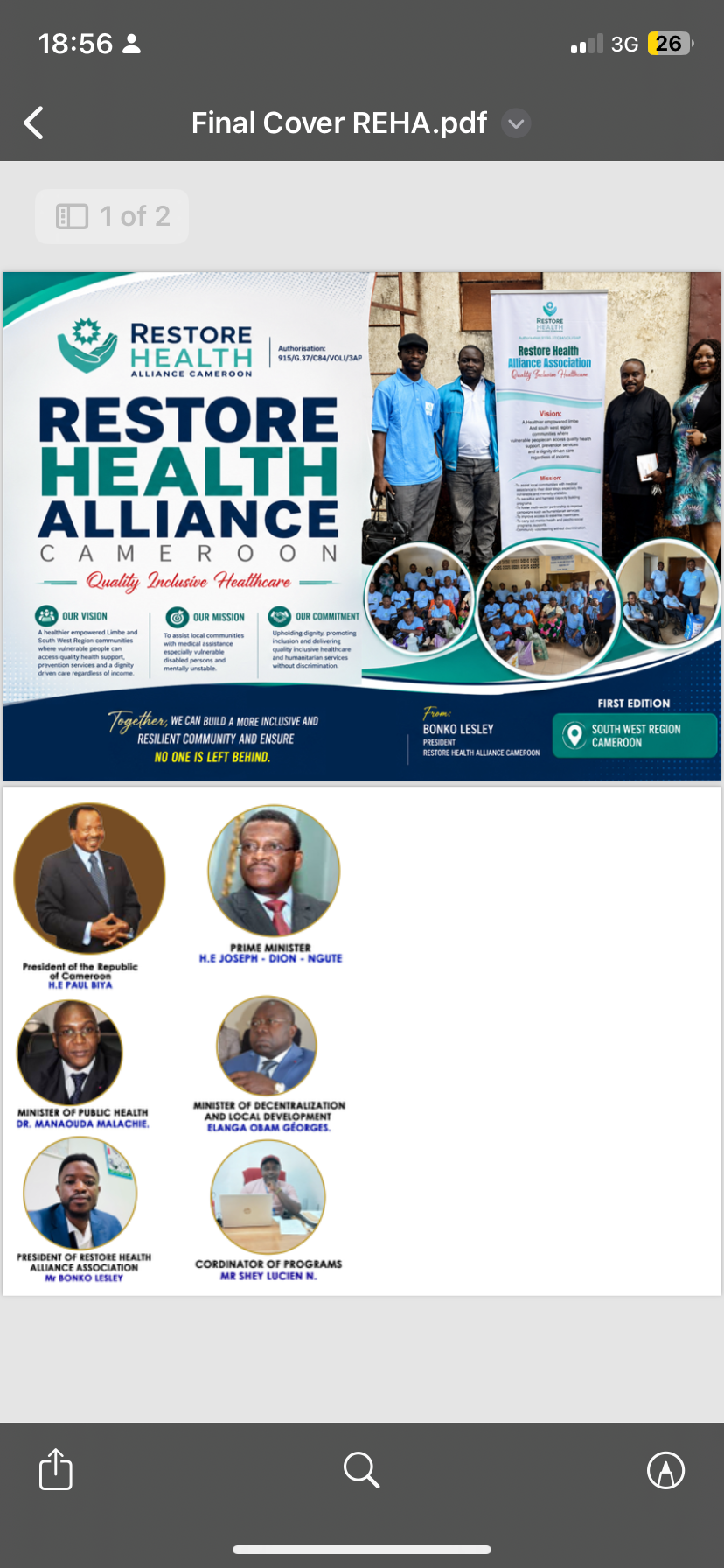
REHA magazine
REHA Magazine
report
Read publication
Get involved
Help REHA make health care more accessible and more compassionate.
Volunteer, support our programs, or connect us with partners who share our commitment to sustainable community health.
Contact
Need help or want to learn more?
Reach out to REHA for questions about our programs, volunteering, partnerships, or how to support our work.